
Switzerland, anchored by Messe Basel and Palexpo Geneva, is the non-EU European market with the highest per-square-metre stand-spend in the world. Watches & Wonders Geneva sets the global high-water mark for exhibition-stand investment. Art Basel sets the benchmark for cultural-event audience curation. The pharmaceutical industry’s CPHI Worldwide and Pharma Engineering anchor the Basel calendar.
Each of these events draws audiences whose evaluation of stand quality is part of the brand argument, in the same cultural framing that elevates Salone del Mobile and Maison&Objet in their respective categories. The cumulative effect is that Swiss exhibition costs run 35-65 percent above the equivalent German venue cost, and luxury-tier custom builds at Watches & Wonders can exceed CHF 8,000 per square metre.
This guide walks through the Swiss exhibition reality: the venue map dominated by Messe Basel, Palexpo Geneva, Bernexpo, and Messe Zurich; the MCH Group operator dominance over Swiss-German venues; the flagship calendar anchored by Watches & Wonders Geneva and Art Basel; the 8.1 percent VAT mechanics and Handelsregister-CH registry; the ATA Carnet customs reality that has always applied to EU exhibitors entering Switzerland; and the luxury, watches, and pharma audience profile that shapes Swiss stand-design defaults.
The Swiss exhibition map
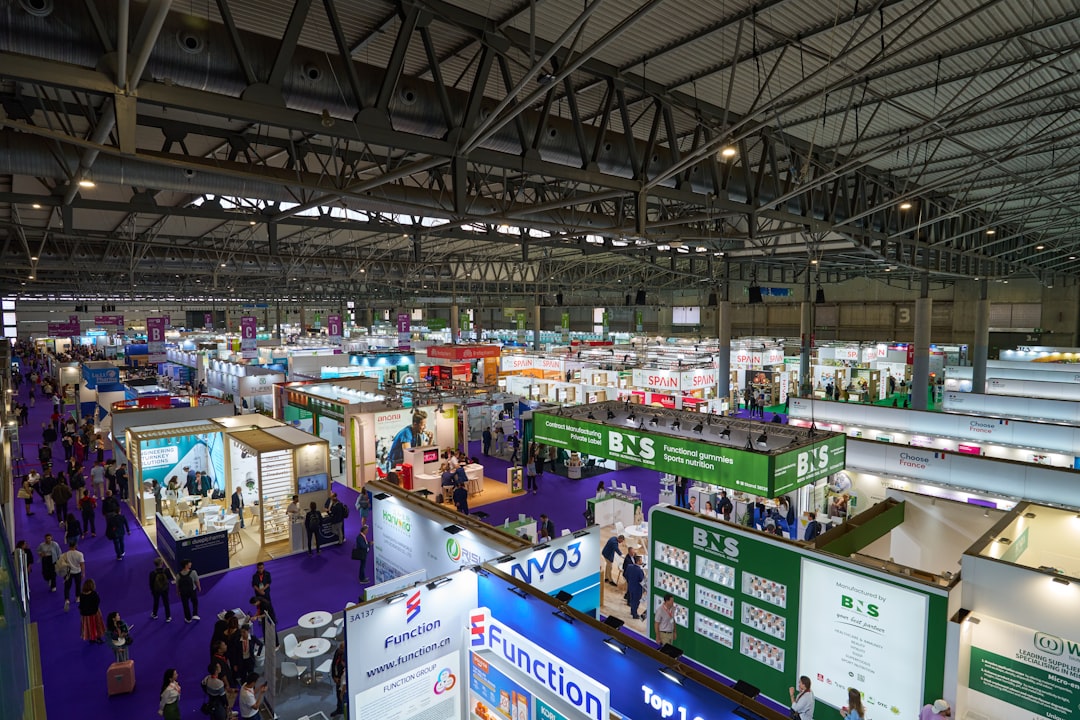
The Swiss commercial exhibition footprint distributes across four anchor venues, with German-Swiss and French-Swiss venues operating in parallel under separate operator groups. Messe Basel and Messe Zurich (both MCH Group) anchor the German-Swiss calendar. Palexpo Geneva anchors the French-Swiss calendar. Bernexpo serves the federal-capital region with substantial conference and exhibition capacity.
| Venue operator | Flagship venues and fairs | Sector strength | Indicative space cost (CHF/sqm) |
|---|---|---|---|
| MCH Group | Messe Basel (Art Basel, CPHI Worldwide, World Trade Forum), Messe Zurich (Top Marques, Zukunftstag) | Contemporary art, pharmaceutical, German-Swiss B2B | 480-820 |
| Foundation Palexpo (Geneva) | Watches & Wonders Geneva, Geneva International Motor Show, Telecom World ITU | Luxury watches, automotive, telecoms, international institutions | 540-950 |
| BERNEXPO | BEA, Suisse Public, Top Marques regional, Swissbau when rotating | Public sector, regional industry, construction | 380-640 |
| Olma Messen St. Gallen | Olma agricultural fair, Suisse EMEX, Tier&Technik | Agriculture, marketing, livestock | 320-560 |
| Messe Luzern | Suisse Toy, Trans Helvetica, regional industrial fairs | Regional consumer and industrial | 300-520 |
Headline base rates above reflect tier-A in-hall positions for standard row stands at the 2026 published calendar in CHF. Corner positions add 10-15 percent, head-of-aisle 15-22 percent, and island positions 20-30 percent. At Watches & Wonders Geneva, premium maison-anchor positions clear 200-500 percent above headline, with the largest watch-maison stands operating on bespoke commercial terms rather than the published rate card.
Switzerland at a glance: the country-specific exhibitor facts
| Fact category | Switzerland-specific reality |
|---|---|
| Top fairs by exhibitor spend | Watches & Wonders Geneva, Art Basel, CPHI Worldwide, Geneva International Motor Show |
| Top venues | Messe Basel, Palexpo Geneva, Messe Zurich, BERNEXPO |
| Standard VAT rate | 8.1% (the lowest standard VAT rate in Western Europe) |
| Trade registry | Handelsregister-CH (German-Swiss) / Registre du Commerce (French-Swiss), cantonally maintained but federally indexed |
| Industry association | EXPO Event Swiss LiveCom Association for event industry; SIA for engineering certification |
| On-site forwarders | Multiple accredited handlers; Welti-Furrer, Natural Le Coultre (Geneva), and Schenker among the largest |
| Payment-term norm | Net 30 standard; venues require typically 40% deposit on space booking, balance 60 days before opening |
| Working language for build-up | German at MCH venues (Basel, Zurich); French at Palexpo Geneva; Italian at Lugano; English fully workable at international flagships |
| Working language for visitor engagement | German/French/Italian based on linguistic region; English fully workable at globally-positioned flagships |
| Structural-calculation framework | SIA (Schweizerischer Ingenieur- und Architektenverein) standards, signed by SIA-registered Swiss engineer |
| Currency | CHF (with significant CHF/EUR exchange rate exposure for EU exhibitors) |
| Customs reality | EU exhibitors require ATA Carnet for temporary goods import, has always been the case, pre-Brexit and post |
| Build-day cultural norm | Precision, punctuality, luxury-tier visible-quality benchmark |
“Switzerland is the European exhibition market where the lowest-cost option is to build it right the first time. Cutting corners on builder selection, customs documentation, or on-site contractor accreditation produces costs that exceed the original savings within one fair cycle. Swiss venues do not subsidise inexperience the way Dutch venues will, and Swiss customs do not forgive paperwork errors the way some EU equivalents have been known to.”, Common framing from multi-decade Swiss-market exhibition managers
Watches & Wonders Geneva: the global flagship
Watches & Wonders Geneva at Palexpo is the global watch industry’s most important annual trade fair. Each spring, the world’s leading watch maisons gather under one roof to present the year’s collections to the global watch trade and press. Rolex, Patek Philippe, Cartier, A.
Lange & Sohne, Vacheron Constantin, IWC, Jaeger-LeCoultre, Hermes, Chanel, Tudor, Tag Heuer, Hublot, Zenith, Panerai, and Piaget, the maison list constitutes the entire core of the luxury watch industry’s globally-significant brands.
The stand-investment scale is the global high-water mark for exhibition stand spending. Tier-one maison stands at Watches & Wonders routinely run CHF 4,500-12,000 per square metre, with the largest maison presences exceeding CHF 15 million in total stand cost across stand build, hospitality, on-stand AV and demonstration infrastructure, and event programming during the fair.
The cultural framing is that the stand is part of the maison’s annual brand statement, and the press coverage generated during Watches & Wonders shapes the global brand narrative for the watch industry across the following twelve months.
For non-watch exhibitors at other Swiss venues, the practical implication is that Watches & Wonders sets the visible-quality benchmark Swiss audiences carry into other Swiss fair experiences. A pharma stand at CPHI Worldwide Basel that meets German-equivalent quality standards but visibly underperforms relative to luxury-tier benchmarks reads as under-invested to Swiss visitors in a way it would not at the German equivalent venue.
Art Basel, CPHI Worldwide, and the other Swiss flagships
The Swiss flagship calendar beyond Watches & Wonders:
- Art Basel (Messe Basel, annually each June), the global contemporary art industry’s flagship event, with parallel editions in Miami Beach (December) and Hong Kong (March-April). The Basel edition is the original and remains the most commercially significant.
- CPHI Worldwide (rotating European venues including Frankfurt, Madrid, Milan, Barcelona; Basel hosts when rotated), the global pharmaceutical ingredients industry’s flagship, drawing the entire pharmaceutical supply-chain ecosystem.
- Geneva International Motor Show (Palexpo, biennial as of 2024 cycle), the global motor show that competes with IAA Mobility Munich, Paris Motor Show, and Tokyo.
- BERNEXPO BEA (Bern, annually), the Swiss federal-capital regional flagship covering consumer goods, agriculture, and Swiss industry.
- Telecom World ITU (Palexpo, episodic), the International Telecommunication Union’s flagship when hosted in Geneva.
- OFFA St. Gallen (Olma, biennial), the Swiss regional consumer flagship.
The current calendar is maintained at /fairs?country=switzerland. Verified stand builders with documented Swiss project history are at /builders?country=switzerland. The Basel, Geneva, Zurich, and Bern city pages aggregate venue, builder, and logistics context at /cities/basel, /cities/geneva, /cities/zurich, and /cities/bern.
The 8.1% VAT mechanics and Handelsregister-CH
Switzerland’s standard VAT rate (MWST/TVA/IVA) is 8.1 percent, the lowest standard VAT rate in Western Europe by a substantial margin (lowered from 8.0 percent to 8.1 percent effective 2024). The low headline rate partially offsets the higher absolute cost-base of Swiss exhibition expenses, but the mechanics for foreign exhibitors are not as forgiving as the rate alone suggests.
For EU exhibitors, the standard rule is that supplies of services in Switzerland (venue rental, on-site catering, build services, on-site handling) are subject to Swiss VAT. EU exhibitors crossing certain turnover thresholds in Switzerland (currently CHF 100,000 in worldwide turnover for compulsory registration) must register for Swiss VAT with the Eidgenoessische Steuerverwaltung in Bern.
The threshold is global turnover, not Swiss-specific turnover, so most internationally-active EU exhibitors trip the compulsory-registration threshold even on first Swiss exhibition activity.
Recovery of Swiss VAT incurred without Swiss VAT registration is possible via a refund process administered by the Eidgenoessische Steuerverwaltung, but is among the slowest in Europe, typical recovery timelines run 12-18 months, with documentary rigour comparable to the Italian equivalent. Cash-flow planning should treat Swiss VAT recovery as a year-two inflow at earliest.
The Handelsregister-CH, the Swiss commercial registry, cantonally maintained but federally indexed at zefix.ch, is the publicly-searchable equivalent of the German Handelsregister or UK Companies House. Every Swiss company carries a Handelsregister-CH (or Registre du Commerce in French-Swiss cantons) entry that appears on commercial invoices and contracts.
For on-stand commercial contracts signed at Swiss fairs, the foreign exhibitor’s home-country registry equivalent is the standard evidence-of-existence requirement.
ATA Carnet: the always-applied Swiss customs reality
Switzerland is not in the EU customs union, and ATA Carnet has been required for EU exhibitors moving goods into Switzerland since long before Brexit imposed the same regime on UK movements. For EU exhibitors with prior Swiss-market experience, the post-Brexit UK customs reality represents the same documentation discipline already applied to Switzerland for decades.
The Eidgenoessische Zollverwaltung (Swiss customs administration) operates among Europe’s strictest customs administrations. Documentation discipline is materially higher than the post-Brexit UK equivalent: under-declaration is penalised promptly with confiscation and fines, paperwork errors trigger held shipments without informal accommodation, and ATA Carnet endorsement at Swiss border posts is meticulous.
The pragmatic implication for foreign exhibitors is to engage forwarders with documented Swiss exhibition-customs experience, Welti-Furrer (German-Swiss), Natural Le Coultre (Geneva), and Schenker (with Swiss customs team) being among the established options.
The Swiss customs cost layer adds typically 1.5-3.0 percent to all-in EU-to-Switzerland exhibition project costs, with most of the cost being administrative rather than duty-based given the temporary-import status of exhibition goods under ATA Carnet.
“Swiss customs has never been the place to learn ATA Carnet documentation. The fastest way for a first-time Swiss exhibitor to lose two days of build-up is to discover an underweighted declaration at the Basel-Weil border post on a Sunday morning when no customs broker is available. Engage forwarders who have done it twenty times before; the price difference is the cheapest insurance in the entire project.”, Common framing from EXPO Event Swiss LiveCom Association senior contractors
Common pitfalls for first-time exhibitors in Switzerland
- Budgeting Swiss exhibition costs on German-comparable assumptions. Swiss stand costs run 35-65 percent above German equivalents; budget accordingly from concept.
- Underestimating CHF/EUR exchange rate exposure. CHF has structurally strengthened against EUR over multi-decade horizons; budget hedge accordingly.
- Skipping experienced Swiss customs forwarder selection. The single highest-leverage spend in Swiss-market entry; do not compromise.
- Treating Watches & Wonders visible-quality benchmark as luxury-only. Swiss audiences carry the same quality expectations into pharma, technology, and other Swiss fairs.
- Assuming MCH accreditation for Messe Basel covers Palexpo Geneva. It does not, Palexpo operates under separate management with separate accreditation.
- Underestimating multi-lingual venue working-language requirements. Basel and Zurich default to German for venue communications; Palexpo defaults to French; Lugano to Italian. English is workable at international flagships but should not be assumed universal.
- Swiss VAT cash-flow planning errors. Refund recovery routinely takes 12-18 months; model as year-two inflow.
The build-day reality in Switzerland
Swiss build-day discipline meets or exceeds German equivalents in process rigour. The structural-calculation regime follows the Swiss SIA framework (substantively equivalent to Eurocodes but requiring SIA-registered Swiss engineer stamping), with on-site safety officer enforcement at standards comparable to or higher than the German Messe equivalents.
EXPO Event Swiss LiveCom Association maintains the Swiss event-industry quality standards and operates the Schweizer LiveCom Award programme that benchmarks Swiss-market stand-build excellence.
On-site handling at Messe Basel, Messe Zurich, and Palexpo Geneva involves multiple accredited handlers operating concurrently, with per-cubic-metre rates that are higher than German equivalents in absolute terms (CHF 110-220 per cubic metre typical) but compete on service responsiveness. The Swiss-precision cultural framing extends to on-site handling: scheduling, communication, and delivery reliability typically exceed German equivalents, but at a higher absolute price.
Worked example: first-time EU exhibitor budget at Messe Basel
A first-time EU exhibitor booking 80 square metres at Art Basel with a luxury-adjacent hybrid build:
- Space rental, 80 sqm at CHF 720/sqm tier-A position: CHF 57,600
- EXPO Event Swiss LiveCom marketing and Art Basel registration: CHF 1,800
- Luxury-adjacent hybrid build with bespoke surface treatments: CHF 168,000
- Structural calculation by SIA-registered Swiss engineer: CHF 3,400
- Inbound freight (one truckload, EU origin, plus Swiss customs brokerage): CHF 6,800
- ATA Carnet preparation, fees, and Swiss customs deposit: CHF 1,400
- MCH on-site handling and storage: CHF 5,400
- On-stand electrics, water, fibre connections: CHF 4,600
- On-stand catering for staff and visitor hospitality (six days, Swiss-tier): CHF 12,800
- Hostess and translation services (six days): CHF 8,400
- Site supervisor (MCH-accredited, six days): CHF 7,200
- Contingency at 10 percent (higher than EU baseline due to currency exposure): CHF 27,800
- Total all-in budget: approximately CHF 305,000 (excluding staff travel, accommodation, and pre-fair marketing)
In EUR terms at typical 2026 exchange rates, this translates to roughly EUR 320,000, approximately 35-45 percent above the equivalent stand cost at Messe Frankfurt for a comparable build profile.
The market-entry decision framework for Switzerland
- Is your category luxury watches, contemporary art, pharmaceutical ingredients, or ultra-premium consumer? → The Swiss flagship in that category is non-substitutable. Plan custom or premium-hybrid build with 10-14 month lead time and CHF-denominated budget at 35-65 percent above German-equivalent benchmarks.
- Is your sector globally anchored at a Swiss fair (Geneva Motor Show, Art Basel, CPHI Worldwide when rotated)? → The Swiss event is the global flagship in its category. Budget premium-tier per-sqm.
- Is your Swiss market entry distribution-recruitment-led for the Swiss domestic market? → BERNEXPO BEA or Olma St. Gallen as regional anchor venues at lower per-sqm cost.
- Are you a multi-fair European exhibitor adding Switzerland to an existing portfolio? → Messe Basel or Messe Zurich slot in alongside German venues with familiar operational discipline but materially higher absolute costs. Plan ATA Carnet documentation from concept.
- Have you exhibited at three or more Swiss fairs? → Consider Swiss VAT registration via Eidgenoessische Steuerverwaltung to escape the 12-18 month VAT recovery cash-flow drag.
Find builders, fairs, and city context for Switzerland
- /builders?country=switzerland, verified stand builders with documented Swiss project history
- /fairs?country=switzerland, full calendar of EXPO Event Swiss LiveCom-listed Swiss fairs
- /cities/basel, /cities/geneva, /cities/zurich, /cities/bern, city-level aggregations
Related reading
- Exhibiting in Germany, the EU industrial neighbour Swiss exhibitors most often pair with
- Exhibiting in France, the French-language EU neighbour Geneva exhibitors most often pair with
- Exhibiting in Italy, the Italian-Swiss design-and-luxury market context
- Exhibiting in Austria, the German-language EU neighbour with comparable precision-market conventions
- Modular vs Custom Decision Framework, build-type framework underneath the Swiss custom-tilt recommendation
- Customs and ATA Carnet, the detailed ATA Carnet picture for Switzerland-bound freight
References and primary sources
- EXPO Event Swiss LiveCom Association, expo-event.ch
- MCH Group, Messe Basel and Messe Zurich exhibitor technical documentation 2026
- Foundation Palexpo, Geneva exhibitor service manual 2026
- BERNEXPO venue technical documentation 2026
- SIA Schweizerischer Ingenieur- und Architektenverein, structural-design framework
- Eidgenoessische Steuerverwaltung, foreign-exhibitor VAT registration requirements
- Eidgenoessische Zollverwaltung, ATA Carnet and temporary-import guidance
- Zefix.ch, Swiss commercial registry federal index
- Watches & Wonders Geneva and Art Basel exhibitor and visitor statistics 2024-2026 editions
FAQFrequently asked questions
Three structural factors compound. First, Switzerland is the highest-cost European labour market by a substantial margin, Swiss stand-builder hourly rates run 60-110 percent above German equivalents, and on-site contractor hourly rates are higher still.
Second, CHF-denominated costing exposes EU exhibitors to currency-conversion premium when CHF strengthens against EUR, which has been the multi-decade direction of travel. Third, the audience profile at major Swiss fairs (Watches & Wonders Geneva, Baselworld pre-2019, Art Basel, Palexpo motor shows) draws luxury and ultra-luxury brands whose stand budgets set the venue-and-builder pricing reference.
The cumulative effect is that comparable hybrid builds at Messe Basel or Palexpo Geneva typically cost 35-65 percent above the equivalent German venue cost, and luxury-tier custom builds at Watches & Wonders can exceed CHF 8,000 per square metre.
Yes, Switzerland is not in the EU customs union, and ATA Carnet (or alternative temporary-import documentation) has always been required for EU exhibitors moving goods into Switzerland and out again. This is the customs regime EU exhibitors had been operating under for Swiss fairs for decades before Brexit imposed the same regime on UK movements.
Swiss customs (Eidgenoessische Zollverwaltung) is reputationally among Europe’s strictest customs administrations, the documentation discipline expected is materially higher than the post-Brexit UK equivalent, and inadvertent under-declaration or paperwork errors are penalised promptly.
Engage forwarders with documented Swiss exhibition-customs experience; the savings from getting the documentation right on first attempt are substantial.
Watches & Wonders Geneva at Palexpo is the global watch industry’s most important annual trade fair, replacing the role previously held by Baselworld at Messe Basel before Baselworld’s collapse in 2019-2020. The event draws the world’s leading watch maisons (Rolex, Patek Philippe, Cartier, A.
Lange & Sohne, Vacheron Constantin, IWC, Jaeger-LeCoultre, Hermes, Chanel, Tudor, and dozens more) under a single roof at Palexpo each spring. Watches & Wonders stands are the global high-water mark for exhibition stand investment: CHF 4,500-12,000 per square metre for tier-one maison presences is the working range, with several maison stands exceeding CHF 15 million in total cost.
The implication for non-watch-industry exhibitors is that Watches & Wonders sets the audience and builder expectations for what flagship Swiss execution looks like, and any luxury-adjacent exhibitor at a Swiss venue is evaluated against that benchmark.
Switzerland’s standard VAT rate (MWST in German, TVA in French, IVA in Italian) is 8.1 percent, the lowest standard VAT rate in Western Europe by a substantial margin. For EU-resident exhibitors, the standard rule is that supplies of services in Switzerland (including venue rental, on-site catering, build services) are subject to Swiss VAT.
EU exhibitors crossing certain turnover thresholds in Switzerland (currently CHF 100,000 in worldwide turnover for compulsory registration) must register for Swiss VAT with the Eidgenoessische Steuerverwaltung. Recovery of Swiss VAT incurred without Swiss VAT registration is possible via a refund process but is among the slowest in Europe, typical recovery timelines run 12-18 months.
The low 8.1 percent rate partially offsets the slow recovery, but cash-flow planning should treat recovery as a year-two inflow at earliest.
MCH Group is the Swiss exhibition-and-event operator that runs Messe Basel, Messe Zurich, and a portfolio of international events. MCH historically operated Baselworld (until its 2019 collapse), and operates Art Basel, the global flagship contemporary art fair with editions in Basel, Miami Beach, Hong Kong, and Paris.
MCH’s dominance over Swiss-German exhibition venues parallels Viparis dominance in Paris, but at smaller absolute scale. The MCH technical and accreditation framework standardises stand-builder requirements across its venues, which makes Swiss-German entries operationally consistent for builders accredited at any MCH venue.
Palexpo Geneva operates outside MCH under separate management, the Foundation Palexpo, with comparable but separately maintained technical standards.
Swiss build-day discipline meets or exceeds German equivalents in process rigour. Messe Basel, Messe Zurich, and Palexpo Geneva operate published time-slot allocations, strict accredited-contractor lists, and on-site safety officer enforcement at standards comparable to or higher than the German Messe equivalents.
The structural-calculation regime follows the Swiss SIA (Schweizerischer Ingenieur- und Architektenverein) framework, which is substantively equivalent to Eurocodes but requires SIA-registered Swiss engineer stamping rather than German Pruefingenieur stamping. EXPO Event Swiss LiveCom Association maintains the Swiss event-industry quality standards.
The cultural framing is precision, punctuality, and high-end professional execution, with luxury-tier audiences setting the visible-quality benchmark that even non-luxury Swiss exhibitors operate against.