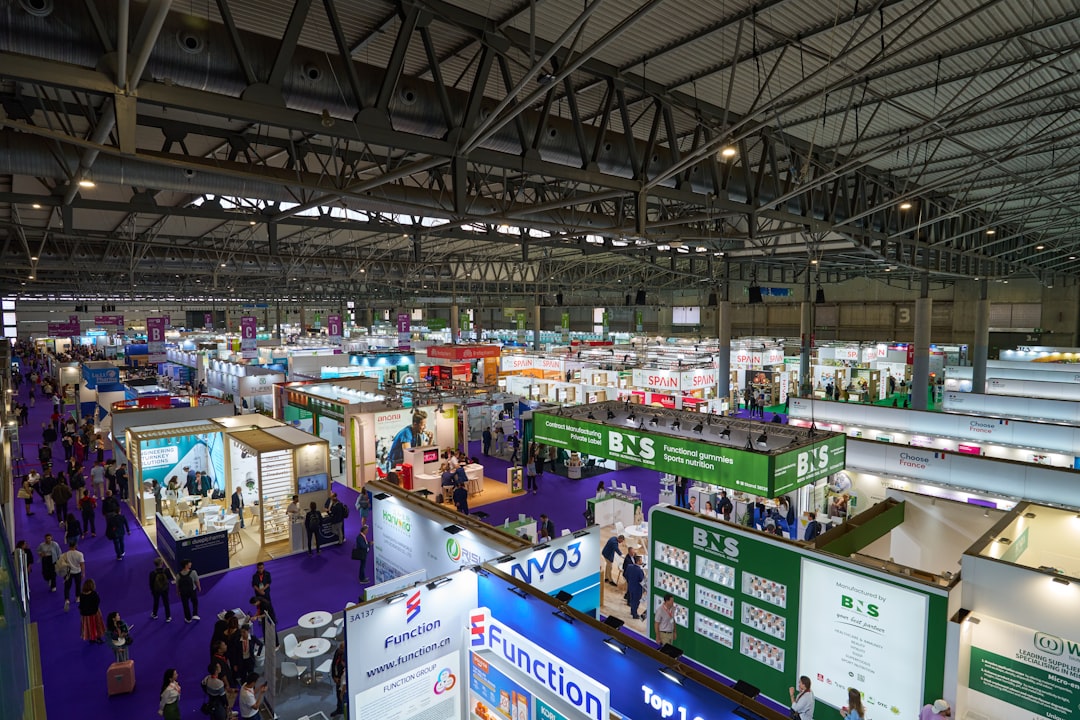

Any Switzerland exhibition customs guide has to start with the venues themselves, because Switzerland is the largest non-EU European exhibition market, anchored by Messe Basel (home to Baselworld’s successor Watches and Wonders Geneva-Basel ecosystem, plus Art Basel and Swissbau), Palexpo Geneva (host to Watches and Wonders Geneva, ITU Telecom World, Le Salon de l’Auto, and EBACE business aviation), Messe Zurich (anchored by Zuspa and the Zurich Auto Show), Bernexpo, and the regional venues in Lausanne, Lucerne, and St.
Gallen. Switzerland sits outside both the EU customs union and the EU VAT area, which means exhibition logistics between Switzerland and EU member states require customs procedures structurally similar to UK-EU movements but with distinctive Swiss specifics.
For European exhibitors building at Swiss venues, the operational mechanics add 5-8 percent to total fair budgets through customs documentation, broker fees, and Swiss-franc cost premiums versus EU equivalents. The exhibition quality at Watches and Wonders, Art Basel, and Baselworld’s heritage successor events ranks among the highest globally, premium audiences, premium press attention, premium stand-build expectations, and the cost premium reflects this position.
This guide covers Swiss customs mechanics (ATA Carnet, temporary admission, Swiss-resident customs brokers), Swiss VAT (MWST) at 8.1 percent and its reclaim mechanics, cost benchmarks across the major Swiss venues, the heritage-grade build culture at Art Basel and Watches and Wonders, and the operational specifics that differentiate Switzerland from the EU bloc.
References draw from Expo Event Swiss LiveCom Association, the Swiss Federal Customs Administration (Eidgenössische Zollverwaltung), the published exhibitor manuals of Messe Basel and MCH Group, and AUMA International Exhibitor Service comparative Swiss-market analysis.
Why Swiss exhibition operations require dedicated planning
Switzerland’s non-EU status produces three structural differences for EU exhibitors:
- Customs declarations mandatory on every shipment. Movement of stand equipment, products, samples, marketing materials, and consumables between Switzerland and the EU requires full customs documentation. The procedural overhead is comparable to UK-EU movements post-Brexit.
- Swiss VAT operates separately from EU VAT. Swiss MWST applies at the standard 8.1 percent rate (one of Europe’s lowest), with a reduced 2.6 percent rate for some categories. Recovery for non-Swiss businesses operates under bilateral arrangements rather than EU directives.
- CHF cost base differs from EUR. Swiss labour rates run 35-50 percent above EU averages; Swiss hospitality costs sit 40-60 percent above equivalent EU equivalents. The CHF premium is real and structural rather than reflecting transient exchange-rate variation.
“Switzerland is the most expensive European exhibition market per square metre by a meaningful margin, with operational complexity comparable to post-Brexit UK. The reason exhibitors continue to invest in Swiss fairs is that the buyer quality at Watches and Wonders, Art Basel, and Baselworld’s heritage successor events is genuinely unmatched in Europe. Premium audiences pay for premium operational overhead.”, Common framing among Expo Event Swiss-affiliated exhibitor advisors
Swiss customs mechanics for EU exhibitors
The customs mechanisms for temporary movement of exhibition equipment between the EU and Switzerland:
ATA Carnet (most common for exhibitions)
The ATA Carnet covers Swiss-EU exhibition movements via the same international procedure that applies to UK movements. Carnets are issued by the home-country chamber of commerce, valid for 12 months, against a security deposit of 30-40 percent of declared equipment value.
The Carnet workflow for Switzerland:
- Apply via national chamber of commerce 2-3 weeks before shipping
- Provide detailed inventory of equipment with serial numbers and declared values
- Pay issuance fee (EUR 300-800) plus security deposit
- Travel with Carnet and present at Swiss border crossings (or at the Swiss-resident customs broker’s office for road shipments)
- Equipment must return to country of origin within Carnet validity period
For most European exhibitors building at Swiss venues, the ATA Carnet is the appropriate mechanism. The Carnet procedure is cleaner than full customs declarations and avoids the need for a Swiss-resident broker for equipment that returns to the EU.
Temporary admission via customs declaration
For shipments not covered by Carnet (consumables, giveaways, products being sold at the fair), temporary admission procedures via the Swiss Federal Customs Administration require declarations filed by a Swiss-resident customs broker. Broker fees for Swiss exhibition imports typically run CHF 280-650 per consignment.
Swiss customs specifics worth noting
- The Swiss-EU border has multiple road crossings (Basel, Geneva-Annemasse, St. Margrethen-Bregenz, Chiasso) plus rail freight terminals. Most exhibition freight transits Basel for German-EU origin shipments and Geneva for French-EU origin shipments.
- Swiss customs operates extended hours at major border crossings (Basel 24⁄7, Geneva extended hours) which means build-up scheduling is less constrained by border-closure windows than UK-EU equivalents.
- Switzerland operates a comprehensive VAT-deferral scheme that allows registered importers to defer import VAT until periodic returns rather than paying at the border, which improves cash-flow for ongoing Swiss exhibitors.
Swiss MWST mechanics
Swiss MWST (Mehrwertsteuer) on exhibition services applies at the 8.1 percent standard rate. Reduced rates of 2.6 percent apply to some categories (basic foodstuffs, books, some hospitality) but do not materially affect exhibitor budgets. The reclaim mechanics for non-Swiss businesses:
- EU-resident exhibitors: file via the Swiss Federal Tax Administration (FTA) under the bilateral arrangement with the EU. Deadline: 30 June of the year following the fair. Refund window: typically 6-9 months from complete filing.
- Non-EU reciprocity countries: file directly with the Swiss FTA via the same bilateral mechanism, with reciprocity-list verification required. The Swiss list aligns broadly with EU norms.
- Minimum claim: CHF 500 annually.
“Swiss VAT recovery is procedurally manageable but slower than the EU equivalents. The 8.1 percent rate is among the lowest in Europe, which means the recoverable pool per stand is materially smaller than at German, French, or Italian equivalents. For brands running purely Swiss fair calendars, the recovery mechanics matter less than the cash-flow timing.”, Expo Event Swiss International Exhibitor Service guidance, 2026 edition
Cost benchmarks across Swiss venues
The table below summarises 2026 published rates and typical all-in budgets for a 100 square metre row stand at the major Swiss fair venues, in CHF with EUR approximations at CHF 1 = EUR 1.04.
| Venue | Location | Hall area (sqm) | Space rental per sqm (CHF / EUR) | All-in 100sqm hybrid (CHF / EUR) | Recoverable MWST (8.1%, EUR) |
|---|---|---|---|---|---|
| Messe Basel | Basel | 141,000 | 425-545 / 442-567 | 150,000-235,000 / 156,000-244,000 | 12,600-19,800 |
| Palexpo Geneva | Geneva | 110,000 | 395-510 / 411-530 | 138,000-218,000 / 143,500-227,000 | 11,600-18,400 |
| Messe Zurich | Zurich | 36,000 | 365-475 / 380-494 | 128,000-205,000 / 133,000-213,000 | 10,800-17,300 |
| Bernexpo | Bern | 40,000 | 295-385 / 307-400 | 108,000-172,000 / 112,000-179,000 | 9,100-14,500 |
| Beaulieu Lausanne | Lausanne | 40,000 | 285-370 / 296-385 | 105,000-168,000 / 109,000-175,000 | 8,800-14,200 |
| Olma Messen St. Gallen | St. Gallen | 30,000 | 265-345 / 276-359 | 98,000-155,000 / 102,000-161,000 | 8,200-13,100 |
Watches and Wonders pricing at Messe Basel and Palexpo Geneva sits structurally above standard venue rates. Premium space at Watches and Wonders Geneva runs CHF 580-720 per square metre rather than the 395-510 base range, reflecting the singular commercial position of the fair in the global luxury-watch calendar.
Heritage-grade build culture at flagship Swiss fairs
Swiss fairs at the flagship tier, Art Basel, Watches and Wonders, Baselworld’s heritage successor jewellery events, operate at the most aesthetically demanding stand-build standard in Europe alongside Salone del Mobile. The build culture characteristics:
Materials specification at heritage-craft level
At Watches and Wonders and Art Basel, stand materials are specified at the same grade as luxury retail flagship stores. Hand-finished metalwork, museum-grade glass, polished concrete, hand-stitched leather, integrated bespoke lighting at architectural-installation scale. The materials specification component of flagship Swiss stands routinely exceeds 25 percent of total build budget.
Lighting designed by specialist consultants
Swiss flagship stands typically commission dedicated lighting designers (often the same studios serving high-end Swiss retail and museum work) rather than relying on stand-builder default lighting. Lighting budgets run CHF 120-280 per square metre on flagship Swiss stands.
Discrete hospitality calibrated for confidential conversations
Swiss buyers and collectors expect discrete hospitality with private meeting capability. Stand layouts include audio-isolated meeting rooms, private collector lounges, and dedicated press hosting zones. The hospitality footprint allocation runs 35-50 percent of stand area at flagship Swiss fairs, the highest of any European exhibition market.
Heritage brand expressions
Swiss luxury brand exhibitors frequently reference brand-heritage architectural elements in stand design, Patek Philippe’s references to Geneva watchmaking workshops, Audemars Piguet’s Le Brassus design language. The cultural-fluency expectation is that international exhibitors at Swiss flagship fairs adapt to this heritage-design register rather than imposing generic international templates.
“Watches and Wonders stands are not exhibition design in the conventional sense, they are temporary luxury retail flagships. The build standard, materials specification, and operational discipline expected match the standard of permanent boutiques in Geneva, Place Vendome Paris, or Bond Street London. Exhibitors who arrive with conventional trade-fair expectations underestimate the standard by a wide margin.”, Common framing among Geneva-based luxury exhibition designers
Cost structure for flagship Swiss presence
Flagship Swiss stand budgets at Watches and Wonders, Art Basel, and Baselworld’s successor events typically run:
| Stand tier | Footprint range (sqm) | All-in budget (CHF / EUR) | Build complexity | Typical brand profile |
|---|---|---|---|---|
| Mid-tier brand | 80-150 | 195,000-485,000 / 203,000-505,000 | Full custom at high-spec materials | Established but not heritage brands |
| Flagship | 200-450 | 650,000-1,650,000 / 676,000-1,716,000 | Architect-designed custom with bespoke materials | Major luxury watch and jewellery brands |
| Heritage flagship | 500-1,200 | 2,200,000-5,500,000 / 2,288,000-5,720,000 | Architect-designed installation-grade | Top-tier heritage brands (Patek, Rolex, Cartier, Vacheron) |
The flagship tier numbers reflect the operational reality of luxury retail-grade stand construction in a Swiss-franc cost base. They are not exaggerations; they are the published benchmark range for the brands that anchor these fairs.
Builder selection for Swiss fairs
The Swiss stand-builder ecosystem clusters around Basel, Geneva, and Zurich, with strong cross-border partnerships into northern Italy and southern Germany. The signals that distinguish builders capable of delivering at Swiss flagship level:
- Expo Event Swiss LiveCom Association member directory listing
- Documented portfolio of at least four Watches and Wonders, Art Basel, or equivalent Swiss flagship stands in the previous three years
- Material-sourcing relationships for luxury-retail grade specifications
- Trilingual project management (German, French, English; Italian increasingly valuable for Ticino-region work)
- Swiss-resident customs broker relationships for cross-border coordination
- Sustainability documentation aligned with Swiss federal environmental standards
The shortlist of builders capable of flagship Swiss delivery is small, approximately fifteen firms across Switzerland and northern Italy. The Exhibition Stands EU /builders directory filters specifically on Swiss-fair portfolios.
Timeline considerations for Swiss fairs
Swiss-specific operational features:
- Watches and Wonders Geneva early April: the global luxury-watch fair commands roughly half of all Swiss-region stand-builder flagship capacity in the eight weeks before the fair
- Art Basel mid-June: the contemporary art fair builds in a compressed window after Watches and Wonders
- Baselworld successor events variable: the post-Baselworld jewellery and watch calendar restructured significantly between 2020-2024; check current schedule for Baselworld successors and parallel events
- EBACE business aviation late May: Palexpo Geneva business aviation fair with strong technical-demo requirements
- Geneva Auto Show variable: after suspension and revival in different formats
- Swiss summer break: lighter than Italian August closure but Swiss firms typically take 2-3 weeks across late July and early August
How Swiss fairs interact with the European calendar
Swiss flagship fairs occupy strategic positions in the European luxury and design calendar. Watches and Wonders, Baselworld successors, Art Basel, and Salone del Mobile collectively define the European spring luxury-fair sequence, with many brands attending three-to-four of these annually. The Swiss positioning within this calendar means that:
- Swiss flagship fair preparation overlaps with Salone del Mobile preparation (mid-April), splitting design and luxury stand-builder capacity
- Swiss fair logistics through Basel benefit from established freight forwarding infrastructure also serving German fairs
- Brands at Watches and Wonders Geneva frequently parallel at Salon de Geneve auto-related events or other Palexpo programming
For the wider Swiss fair context, see Exhibiting in Switzerland: Messe Basel and Palexpo. For comparable customs mechanics in the UK market, see Post-Brexit UK Exhibition Customs Guide.
Related reading
- Exhibiting in Switzerland: Messe Basel and Palexpo, country baseline
- Watches and Wonders Geneva Stand Strategy, flagship Swiss fair deep dive
- Post-Brexit UK Exhibition Customs Guide, comparable customs mechanics
- Modular vs Custom Decision Framework, Swiss flagship fairs sit firmly in custom-default tier
- Booth Cost Calculator, model Swiss fair budgets with CHF cost base
- Builder Directory, Swiss-experienced builders with flagship-fair portfolios
References and primary sources
- Expo Event Swiss LiveCom Association, member directory and exhibitor service standards 2026
- Swiss Federal Customs Administration (Eidgenössische Zollverwaltung), temporary admission procedures
- Swiss Federal Tax Administration (FTA), foreign MWST refund procedure documentation
- Messe Basel and MCH Group, exhibitor service manuals 2026 edition
- Palexpo Geneva, technical guidelines and exhibitor regulations
- Watches and Wonders Geneva organising committee, exhibitor service standards
- Art Basel, exhibitor manual and structural standards
- AUMA International Exhibitor Service, Swiss market comparative analysis 2026
FAQFrequently asked questions
Switzerland sits outside both the EU customs union and the EU VAT area despite being geographically encircled by EU member states. This non-EU status means that movements of stand equipment, products, samples, and consumables between Switzerland and EU member states require full customs documentation comparable to post-Brexit UK movements.
Switzerland maintains bilateral arrangements with the EU that smooth some aspects of cross-border movement but does not eliminate the customs procedural requirements. The non-EU status is structural and unlikely to change.
Swiss MWST (Mehrwertsteuer) on exhibition services applies at the standard 8.1 percent rate, one of the lowest in Europe. Reduced rates of 2.6 percent apply to some categories including basic foodstuffs, books, and some hospitality, but do not materially affect exhibitor budgets.
The 8.1 percent rate is materially lower than Germany (19 percent), France (20 percent), Spain (21 percent), Netherlands (21 percent), and Italy (22 percent). The recoverable VAT pool per Swiss stand is therefore smaller in absolute terms despite the higher overall cost base.
EU-resident exhibitors file via the Swiss Federal Tax Administration under the bilateral arrangement with the EU. The deadline is 30 June of the year following the fair, with a refund window of 6-9 months. Non-EU reciprocity countries file directly with the Swiss FTA through the same bilateral mechanism. Minimum claim is CHF 500 annually.
The procedural workflow is manageable but slower than the EU Eighth Directive equivalent, with refund timing among the slowest in major European exhibition jurisdictions.
Swiss labour rates run 35-50 percent above EU averages, Swiss hospitality and accommodation costs sit 40-60 percent above equivalent EU equivalents, and the CHF-EUR exchange rate carries a structural premium versus EUR-zone economies. The cumulative effect is that a comparable stand build costs 30-50 percent more in Switzerland than in Germany, France, or the Netherlands.
At the flagship tier (Watches and Wonders, Art Basel), the cost premium reflects both the operational cost base and the heritage-grade material specifications expected at these events.
For ATA Carnet shipments returning to the EU after the fair, the EU forwarder can typically present the Carnet at Swiss borders without requiring separate Swiss broker engagement. For non-Carnet shipments (consumables, giveaways, sold products), a Swiss-resident customs broker is required for filing temporary admission declarations and customs documentation.
Many EU forwarders maintain partnership relationships with Swiss customs brokers and provide bundled service. The broker-versus-forwarder decision depends on shipment mix and Carnet eligibility, for pure equipment shipments, Carnet plus EU forwarder is typically sufficient.
Messe Basel hosts Art Basel (mid-June) and the Watches and Wonders Basel components plus Swissbau and BAMA. Palexpo Geneva hosts Watches and Wonders Geneva (early April), EBACE business aviation (late May), and ITU Telecom World periodically. Messe Zurich hosts Zuspa and the Zurich Auto Show. Bernexpo, Beaulieu Lausanne, and Olma Messen St.
Gallen serve Swiss-domestic and regional fairs with lower international visibility. For international exhibitors, Messe Basel and Palexpo Geneva are the venues that warrant the operational and cost investment of Swiss fair participation.